
 See My Latest Article on HelloNation
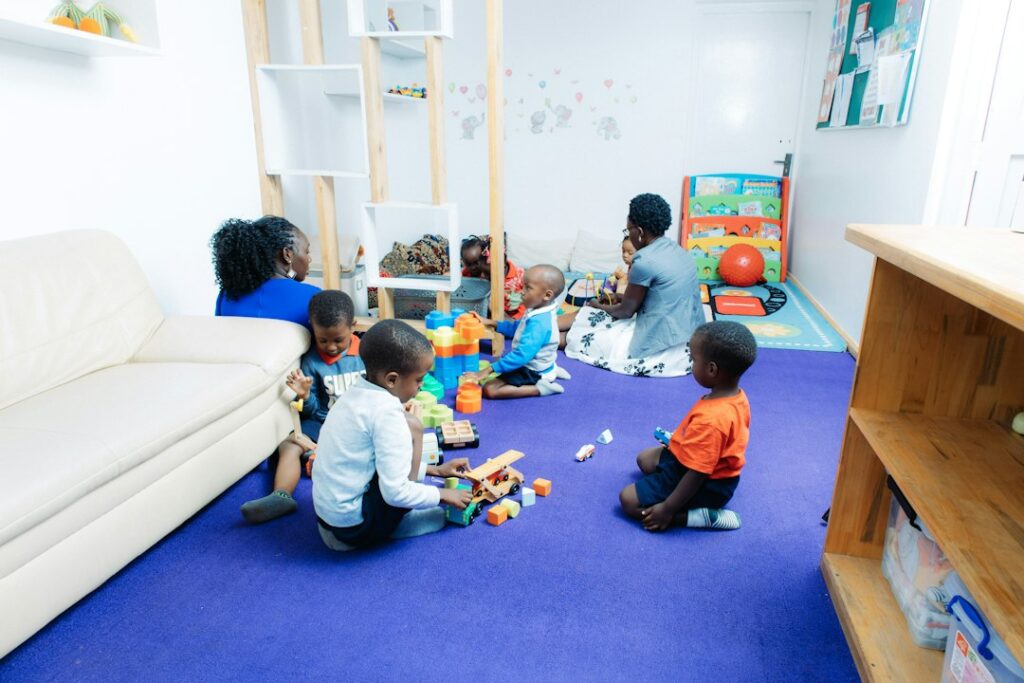
Starting preschool is a major transition for a young child and the adults who care for them. During the first year, children usually learn how to participate in a group, separate from family members, communicate their needs, manage emotions, and become more independent with daily routines.
Preschool is not simply an earlier version of elementary school. Much of the learning happens through play, conversation, movement, exploration, and repeated practice. Pennsylvania’s early learning standards emphasize approaches to learning, social-emotional development, language, literacy, mathematics, science, creativity, physical development, and health. ([pa.gov](https://www.pa.gov/agencies/education/programs-and-services/instruction/early-learning/early-learning-standards?utm_source=openai))
What does the first few weeks of preschool usually look like?
The first weeks are often focused on adjustment rather than academic performance. Children are learning the classroom layout, daily schedule, teacher expectations, and how to interact with unfamiliar adults and peers.
A typical day may include:
- Arrival and greeting
- Free-choice play or learning centers
- Group meeting
- Stories, songs, or conversation
- Art, building, sensory play, or early math activities
- Outdoor or large-motor movement
- Snack and bathroom routines
- Rest or quiet time, depending on the program
- Cleanup and preparation for dismissal
Some children enter comfortably on the first day. Others may cry at drop-off, remain quiet, avoid group activities, or appear tired after school. These reactions can be normal, especially when the schedule is new.
A consistent goodbye routine usually helps. A brief, calm farewell is often easier for a child than a long departure filled with uncertainty. Families should follow the program’s safety and dismissal procedures carefully, particularly during the first several days.
What skills will children develop during the year?
Children generally make progress in several connected areas rather than mastering one subject at a time.
Social and emotional development
Children practice sharing materials, waiting for a turn, joining play, responding to boundaries, and recovering from frustration. They may begin using words such as “I need help,” “Can I play?” or “I’m still using that.”
Teachers may help children identify emotions, solve small conflicts, and understand that different people can have different needs. A child who still needs adult help with strong feelings is not necessarily behind. Self-regulation develops gradually through supportive relationships and repeated experiences.
Language and early literacy
Preschoolers hear stories, discuss pictures, learn new vocabulary, notice sounds, recognize some letters or names, and experiment with drawing and writing. They may dictate stories to an adult, pretend to read, identify rhyming words, or retell familiar events.
The goal is not for every child to read independently before kindergarten. A stronger early foundation includes listening, speaking, understanding directions, enjoying books, asking questions, and becoming curious about written language.
Early mathematics and reasoning
Children encounter mathematics while counting blocks, comparing sizes, sorting objects, noticing patterns, measuring ingredients, and deciding how many materials are needed for a project.
Teachers may introduce numbers and shapes directly, but mathematical thinking also appears in ordinary play. Building a tower, arranging toy animals, or dividing snacks can involve counting, classification, spatial reasoning, and problem-solving.
Physical development and independence
Children work on both large-motor and fine-motor skills. Running, climbing, balancing, dancing, cutting, drawing, painting, and manipulating small objects all support development.
They also practice practical routines such as washing hands, opening containers, putting on coats, using the bathroom, cleaning up, and carrying personal belongings. Independence may be uneven: a child might manage one routine at school but still need substantial help at home.
How much learning happens through play?
Play is a primary way young children learn. It allows them to practice language, cooperation, planning, imagination, self-control, and flexible thinking in a meaningful setting.
For example, a pretend grocery store may involve:
- Writing signs or shopping lists
- Counting objects
- Taking turns as a cashier or customer
- Negotiating roles
- Using descriptive vocabulary
- Solving problems when materials are limited
A classroom with play-based learning should still have intentional teaching. Adults observe children, ask thoughtful questions, introduce new vocabulary, model social skills, and provide materials that extend children’s ideas. Pennsylvania guidance describes comprehensive early learning as developmentally appropriate across academic, social, creative, physical, and health-related areas. ([pa.gov](https://www.pa.gov/agencies/education/programs-and-services/instruction/early-learning/early-learning-standards/approved-curriculum-information?utm_source=openai))
What behavior changes might families notice at home?
Preschool can be tiring. A child may be cheerful at school but have more meltdowns at home, become unusually quiet, resist bedtime, or seem less independent in the evening. This can happen because the child is using significant energy to manage a new environment.
Helpful responses include:
- Keeping morning and bedtime routines predictable
- Allowing extra time for dressing and departure
- Offering a snack and quiet transition after school
- Asking specific questions instead of “How was school?”
- Accepting that the child may not be ready to talk immediately
- Avoiding comparisons with classmates or siblings

Questions such as “What did you build?” or “Who sat near you at snack?” may produce more useful conversation than broad questions.
Temporary regression is also common. A toilet-trained child may have an accident, or a child who usually separates easily may begin crying again after several weeks. Families should look for patterns and share concerns with the teacher rather than assuming the child is misbehaving.
How will teachers measure progress?
Preschool assessment is usually based on observation, conversations, work samples, developmental checklists, and information shared by families. Teachers may document how a child approaches a puzzle, follows directions, joins play, communicates, or manages a routine.
This is different from frequent paper-and-pencil testing. Pennsylvania’s early learning guidance explains that educators use multiple sources of information, including family engagement, observations, children’s work, and discussions about accomplishments. Assessment information should help adults plan support; it should not be used to exclude a child from an eligible program or determine placement by itself. ([pa.gov](https://www.pa.gov/agencies/education/programs-and-services/instruction/early-learning/early-learning-standards?utm_source=openai))
Families can support accurate assessment by sharing information about sleep, language use, interests, health changes, family routines, and behavior at home. A child may show different skills in a familiar home setting than in a busy classroom.
What should families communicate with the teacher?
Early, practical communication is usually more helpful than waiting for a formal conference. Families should share information such as:
- Allergies, medication needs, or health concerns
- Preferred name and pronunciation
- Languages used at home
- Comfort items and separation patterns
- Bathroom or toileting needs
- Sensory sensitivities
- Changes in sleep, family circumstances, or transportation
- Previous evaluations or support plans
Families should also ask how the classroom handles biting, aggressive behavior, toileting accidents, rest time, outdoor play, and communication about injuries or illness. Clear expectations reduce confusion during the year.
If a child receives early intervention services or has an individualized support plan, communication among caregivers, teachers, and appropriate specialists can help maintain consistency. Pennsylvania’s early childhood system identifies families, schools, early intervention programs, and community partners as important participants in school readiness. ([pa.gov](https://www.pa.gov/agencies/education/programs-and-services/instruction/early-learning?utm_source=openai))
What local conditions may affect the preschool routine?
In Allentown, seasonal weather can influence arrival, outdoor play, clothing, and transportation. Families may need labeled layers, waterproof footwear, spare clothes, and a plan for winter mornings when travel or walking conditions are less predictable.
Housing patterns and household schedules also vary. Some children may be accustomed to shared bedrooms, multigenerational care, irregular work schedules, or more than one language at home. These experiences are not problems to be corrected. They are useful context for teachers planning routines and supporting each child.
By spring, many children are more comfortable entering the classroom, participating in group activities, solving peer conflicts, managing belongings, and explaining what they have learned. Progress may appear gradually and unevenly, but the first preschool year should build confidence, relationships, communication, curiosity, and readiness for the next setting.