

 See My Latest Article on HelloNation
Young children are constantly forming beliefs about themselves as learners. A child who hears that skills can improve through practice, patience, and support is more likely to keep trying after a mistake. This belief is commonly called a growth mindset.
In Allentown, PA, families may notice growth mindset development during ordinary moments: learning to zip a coat, solving a puzzle, joining a group activity, sounding out a new word, or managing frustration during play. These experiences give children repeated opportunities to discover that effort and problem-solving can lead to progress.
What is a growth mindset in early childhood?
A growth mindset is the understanding that abilities are not completely fixed. Children with this outlook begin to believe that they can improve through practice, helpful strategies, and encouragement.
Young children do not need to understand the term “growth mindset.” They develop it through daily interactions. Adults support this development when they:
- Recognize effort and persistence
- Encourage children to try different strategies
- Treat mistakes as useful information
- Allow reasonable time for children to solve problems
- Avoid labeling a child as naturally “good” or “bad” at something
A growth mindset does not mean telling children that they can accomplish anything instantly. It means helping them understand that learning often takes time and that struggle is a normal part of the process.
How can adults encourage persistence without creating pressure?
Children are more likely to persist when adults offer calm support rather than demanding immediate success. The goal is to encourage effort while respecting a child’s age, temperament, and current ability.
Instead of saying, “Try harder,” adults can use specific observations:
- “You kept working even when the pieces did not fit.”
- “You tried turning the puzzle piece around.”
- “That part was difficult. What could you try next?”
- “You are still learning how to hold the scissors safely.”
- “You solved it after trying two different ways.”
These statements connect progress to actions the child can repeat. They also avoid making the child feel that effort alone is being judged.
If a child becomes overwhelmed, a brief pause may be more helpful than continued encouragement. A drink of water, a movement break, or a change to a simpler task can help the child return with greater focus.
What should parents say when a child says, “I can’t”?
“I can’t” often means “I cannot do this yet,” “I do not know how,” or “I am afraid of making a mistake.” Adults can respond by acknowledging the feeling and gently widening the child’s view of the situation.
Useful responses include:
- “You cannot do it yet. Let’s look at the first step.”
- “That feels frustrating. Would you like help getting started?”
- “Which part seems hardest?”
- “You have learned other things that were difficult at first.”
- “Would you like to watch once, try together, or try by yourself?”
The phrase “not yet” can be helpful when used honestly. It should not dismiss genuine frustration or turn every difficulty into a motivational lesson. A child may need comfort before being ready to try again.
How do mistakes help children learn?
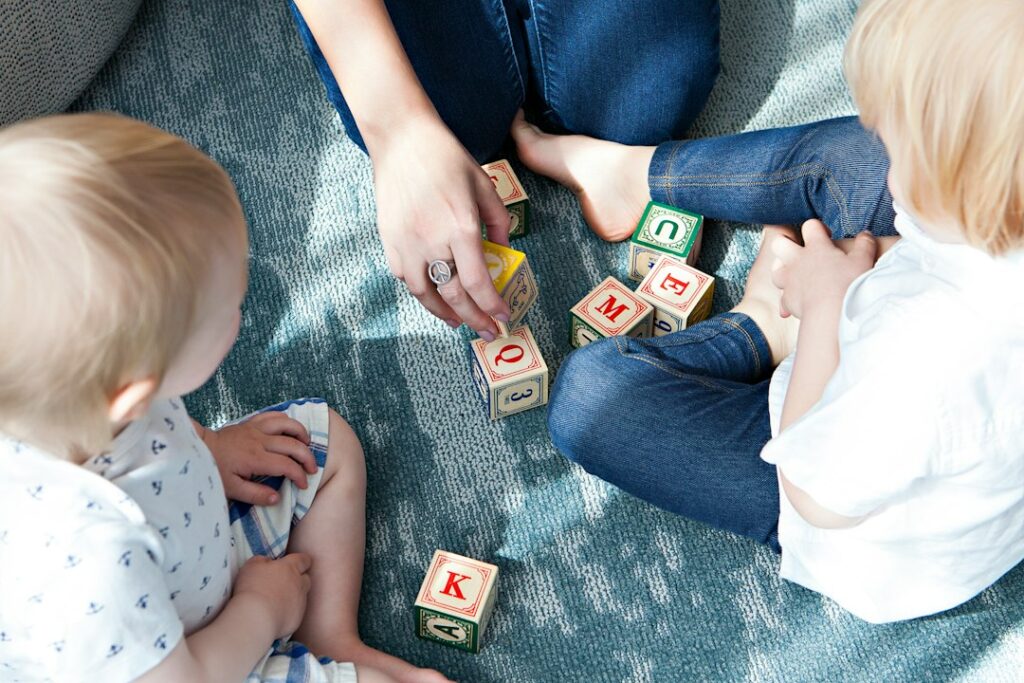
Mistakes provide information. A child who builds a block tower that falls can learn about balance, weight, and placement. A child who spills while pouring water can practice controlling movement and adjusting the container.
Adults can help by responding without shame or alarm when the situation is safe:
1. Describe what happened without blame.
2. Ask what the child notices.
3. Consider one possible change.
4. Give the child another opportunity to try.
For example: “The tower tipped when the heavy block was placed on top. What might happen if the wider blocks go at the bottom?”
This approach differs from praising every result or quickly fixing the problem. Children need chances to experience manageable setbacks and discover that a different approach may work.
Does praising intelligence undermine a growth mindset?
Praise such as “You are so smart” is not harmful in every situation, but it can sometimes make children worry about protecting that label. If a task becomes difficult, a child who believes success proves intelligence may avoid the challenge.
Process-focused praise is usually more useful. It identifies what the child did rather than assigning a broad identity:
- “You noticed the pattern.”
- “You remembered the instructions.”
- “You asked for help when you needed it.”
- “You practiced that movement several times.”
- “You changed your plan after the first attempt.”
Children also need recognition for qualities beyond persistence, including kindness, creativity, careful observation, cooperation, and self-control.
How can growth mindset be built into play?
Play is a natural setting for children to experiment without needing a perfect result. Adults can support learning by asking open-ended questions instead of directing every step.
During block play, an adult might ask:
- “How could you make the bridge stronger?”
- “What could support the middle?”
- “What do you think will happen if you add another block?”

During art activities, questions might include:
- “What are you planning to try?”
- “How did you make that color?”
- “What could you change if you wanted a different result?”
During pretend play, children practice flexible thinking, communication, and problem-solving. Adults can follow the child’s ideas while occasionally introducing a manageable challenge, such as finding a way to transport several toys or creating a sign for a pretend store.
The purpose is not to turn play into a lesson. It is to notice the thinking already taking place.
What role do routines and the local environment play?
Consistent routines give children repeated opportunities to practice skills. In households managing busy schedules, shared spaces, younger siblings, or changing seasonal conditions, small responsibilities can support independence without adding pressure.
Children might help:
- Choose clothing appropriate for a cold or rainy day
- Organize books or toys into categories
- Pack a small activity for a family outing
- Help prepare a simple snack
- Check whether a plant needs water
- Put away outdoor items after play
The task should be appropriate for the child’s developmental level. A four-year-old may need pictures or reminders, while an older child may be ready to plan several steps. The adult’s role is to provide structure without taking over too quickly.
What are common mistakes adults make?
A growth mindset can be weakened when encouragement becomes exaggerated, constant, or disconnected from the child’s actual effort. Telling a child, “You worked so hard,” when little effort occurred may feel confusing or insincere.
Other common problems include:
- Comparing children with siblings or classmates
- Finishing tasks immediately because it is faster
- Treating frustration as misbehavior every time
- Expecting persistence when a child is tired, hungry, or overstimulated
- Using “not yet” to avoid addressing a real learning difficulty
- Assuming every child should respond to the same type of encouragement
Children develop at different rates. Persistent difficulty with a skill may reflect a need for clearer instruction, more practice, a different approach, or additional developmental support. A growth mindset should never be used to blame a child for struggling.
How can families model this attitude?
Children notice how adults respond to everyday challenges. A parent or caregiver can model flexible thinking by saying, “That did not work the way I expected. I am going to try another method,” or, “I made a mistake, so I am checking the instructions.”
Adults do not need to appear confident all the time. Showing how to manage disappointment, ask for help, take a break, and return to a task teaches children that learning is an ongoing process for everyone.
The most effective support is usually steady and specific: acknowledge feelings, describe effort accurately, offer a useful next step, and allow the child enough time to participate in solving the problem.