

 See My Latest Article on HelloNation
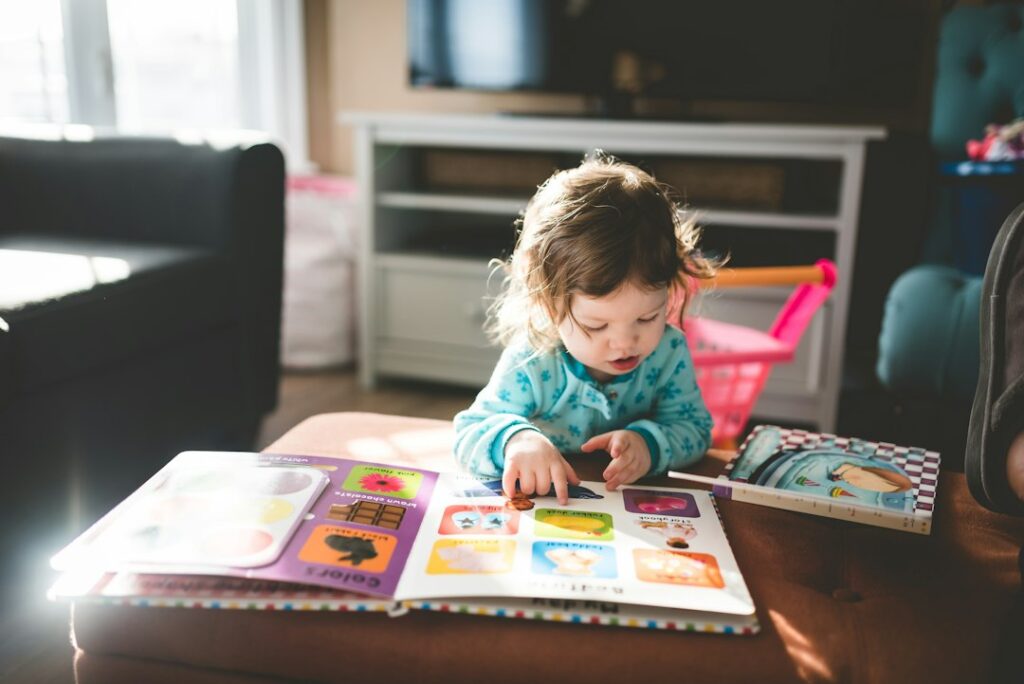
Young children begin developing literacy long before they read independently. Talking, listening, looking at books, recognizing sounds, drawing, pretending to write, and learning new words all prepare children for kindergarten.
For families in Allentown, PA, early literacy can be built into ordinary routines at home, in child care, outdoors, and during quiet time. The goal is not to push formal reading too early. It is to help children become comfortable with language, books, stories, sounds, and communication.
What does early literacy include?
Early literacy is the collection of skills children develop before formal reading and writing instruction. These skills include language development, print awareness, phonological awareness, vocabulary, comprehension, and early writing.
A child developing early literacy may:
- Listen to and talk about stories
- Recognize familiar books or characters
- Turn pages and notice pictures
- Understand that print carries meaning
- Notice rhyming words or repeated sounds
- Recognize some letters, especially those in their name
- Scribble, draw, or make letter-like marks
- Retell parts of a familiar story
- Ask questions and explain ideas
Children do not all develop these abilities at the same pace. A child may have strong storytelling skills but not yet recognize many letters. Another may enjoy writing marks but use fewer words in conversation. These differences are common during the preschool years.
How does reading aloud help before kindergarten?
Reading aloud supports vocabulary, listening, comprehension, attention, and knowledge about how books work. Children learn that spoken words can be represented by printed words and that stories usually have a beginning, middle, and end.
A daily reading routine does not need to be long. Even 10 to 15 minutes can be useful when the adult pauses to talk with the child.
Helpful questions include:
- “What do you think will happen next?”
- “Why do you think the character did that?”
- “What do you notice in this picture?”
- “Have you ever seen something like this?”
- “Can you tell the story in your own words?”
It is not necessary to finish every book. If a child wants to talk about one page, repeat a favorite section, or study the pictures, that interaction is still supporting literacy.
Children also benefit from hearing many kinds of books, including stories, nonfiction, poetry, wordless picture books, and books about everyday experiences. Wordless books are especially useful because they invite children to create descriptions and narratives from pictures.
What if a child does not sit still for books?
Movement and reading can work together. Some children listen better while holding a soft toy, sitting on the floor, or taking brief movement breaks. A child who leaves after a few pages may still be absorbing language.
Try shorter reading periods, books with predictable patterns, or stories connected to the child’s current interests. A book about animals, vehicles, weather, cooking, or construction may hold attention more effectively than a book chosen only because it is considered educational.
Reading does not always have to happen at bedtime. Families may read during a quiet morning, after lunch, before leaving the house, or while waiting during an appointment. Keeping books within a child’s reach can also encourage independent exploration.
How can everyday conversation strengthen literacy?
Conversation is one of the most accessible early literacy activities. Children learn new words and sentence patterns through back-and-forth exchanges, not only through books.
Adults can expand what a child says without turning the interaction into a quiz. If a child says, “Big truck,” an adult might respond, “Yes, the big delivery truck is carrying boxes.” This adds descriptive language while keeping the conversation natural.
Try discussing:
- What happened during the day
- How food changes while cooking
- What clothing is needed for cold or rainy weather
- How a toy works
- What people are doing in the neighborhood
- How two objects are alike or different
Local seasonal changes can provide many conversation opportunities. Snow, rain, fallen leaves, warm-weather insects, and changes in daylight all offer subjects for describing, comparing, predicting, and asking questions.
Children also need time to speak. Adults can pause instead of immediately answering for them, giving the child an opportunity to find words, explain an idea, or finish a story.
How can parents introduce letters and sounds without pressure?
Children benefit from playful exposure to letters and sounds. Formal drills are not required for most preschool learning.

Start with meaningful print. Point out the first letter in a child’s name, notice letters on household items, or help the child identify letters on a calendar. Use language such as, “That is the letter M. It is at the beginning of Maya,” rather than expecting the child to memorize a long list.
Sound awareness can be practiced through songs, rhymes, and word games:
- “What rhymes with cat?”
- “Can you think of a word that starts like sun?”
- “Let’s clap the parts in the word banana.”
- “I hear the /b/ sound at the beginning of ball.”
Some children may not yet pronounce every sound clearly. That does not prevent them from listening for similarities between words. The focus should be on noticing and playing with sounds, not on correcting every attempt.
How does drawing prepare children to write?
Drawing strengthens hand control, visual attention, and the understanding that marks can communicate meaning. Children do not need to form perfect letters before kindergarten.
Offer crayons, washable markers, pencils, chalk, paintbrushes, or other age-appropriate tools. Encourage children to draw people, maps, pretend menus, signs, family pictures, or stories. Ask them to explain what they made and, when appropriate, write down their words.
Adults can model writing by making a grocery list, labeling a drawing, writing a short note, or keeping a simple calendar. Children learn that writing serves real purposes.
If a child reverses letters or writes from right to left during the preschool years, that is not automatically a concern. Early writing often includes unusual shapes, random strings of letters, and invented spelling as children experiment with print.
What role does bilingual or multilingual language use play?
Using the language a family knows best supports strong communication and does not prevent English literacy development. Children can develop vocabulary, storytelling, listening, and comprehension in more than one language.
Families can read, sing, tell stories, and discuss daily experiences in any language used at home. A child may know a concept in one language before learning the corresponding word in another. That knowledge remains valuable and can support later learning.
Books in multiple languages, oral storytelling, songs, and conversations with relatives can all contribute to literacy. Children may mix languages while developing communication skills; this can be a normal part of multilingual development.
How can families create a supportive literacy routine?
A useful routine is predictable, flexible, and enjoyable. Keep a small selection of books available where children can reach them safely. Visit libraries or community reading spaces when practical, and include books in quiet-time routines even when the day is busy.
A balanced routine might include:
- A short story or song
- Conversation about an activity
- A few minutes of drawing or pretend writing
- A sound or rhyme game
- Time for the child to look at books independently
Screens can sometimes support storytelling or language activities, but they should not replace conversation, play, hands-on exploration, or shared reading. Young children learn especially well when an adult talks with them about what they see and do.
When should families ask about a child’s development?
A child’s progress should be considered broadly rather than judged by one skill, such as knowing all letters. Families may want to discuss concerns with a pediatrician, teacher, or early childhood specialist if a child rarely responds to communication, is difficult for familiar adults to understand, has significant difficulty hearing, shows little interest in interaction, or loses skills previously developed.
Hearing, vision, speech, language, attention, and learning all affect early literacy. Asking questions early can help families understand what support may be appropriate. Concern does not mean a child will struggle permanently; it means the adults around the child are gathering information and responding thoughtfully.
Before kindergarten, the most valuable literacy experiences are usually the ones children can repeat often: listening to stories, talking with caring adults, singing, playing with sounds, drawing, and asking questions about the world around them. These everyday activities give children a foundation for understanding language and becoming confident learners.