

 See My Latest Article on HelloNation
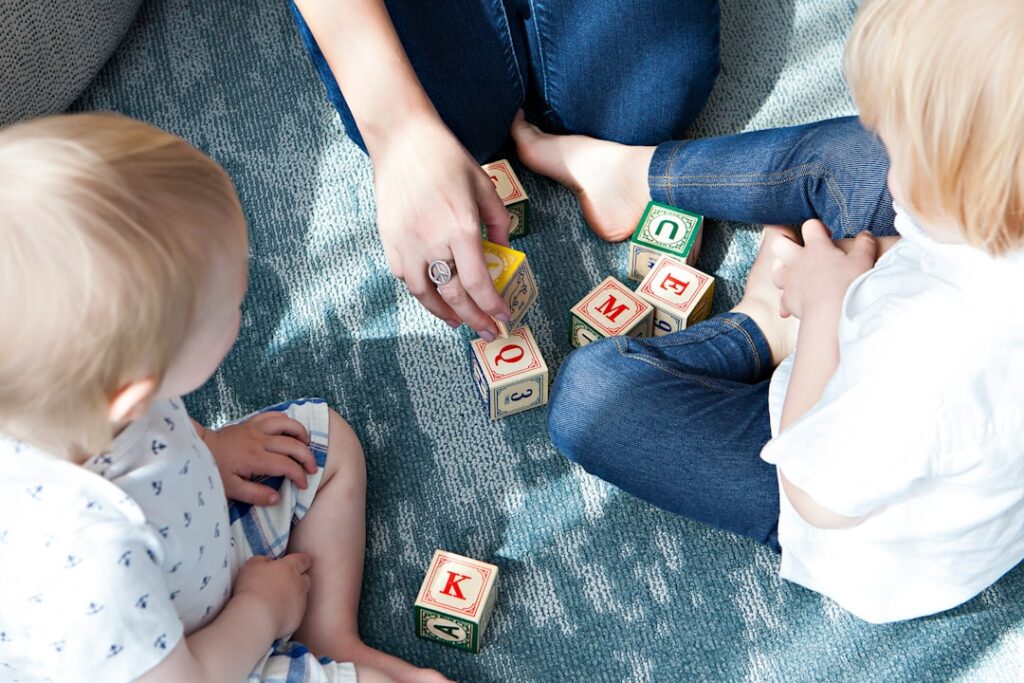
What Is Play-Based Learning and Why Does It Matter?
Play-based learning is an educational approach that allows young children to explore and learn through guided and free play. Unlike more structured or academic formats, this method emphasizes hands-on, active engagement with materials, peers, and the environment. Educators recognize that for children under age six, meaningful learning happens best when playful curiosity is encouraged.
Research shows that unstructured and structured play both support the development of foundational skills for school and life. These include social abilities, communication, emotional self-regulation, decision making, and even early math and literacy. For families in Allentown, integrating play-based learning at home or seeking it in early childhood programs provides opportunities for children to thrive across multiple developmental areas.
How Does Play Support Learning in Early Childhood?
Play supports cognitive, social, and physical development by engaging children’s natural sense of wonder. Through imaginative play—such as building with blocks or pretending in a play kitchen—kids make sense of the world around them, experiment with ideas, and build problem-solving skills.
In play, children may:
- Develop language by talking with friends or adults
- Practice counting, sorting, or pattern-making with common objects
- Learn turn-taking, negotiation, and empathy
- Improve fine and gross motor skills through climbing, drawing, or constructing
Allentown’s climate allows for both indoor and outdoor play nearly year-round, meaning families can encourage these experiences in parks, yards, and community play spaces in most seasons. Rainy or snowy days can be opportunities for sensory play or creative projects inside.
What Are Common Types of Play-Based Activities?
Children benefit from a range of play experiences, and many everyday activities serve as powerful learning opportunities. Examples include:
- Dramatic play (pretend shops, family scenarios, costumes)
- Creative arts (painting, sculpting, crafting)
- Building and construction (blocks, recycled materials, sand)
- Outdoor exploration (nature walks, gardening, playing with water)
- Simple games (matching cards, sorting objects, board games)
These activities can happen at home, in parks, or within early learning settings available to families in the city. Mixing open-ended activities—where there isn’t a single “right” answer—with some more structured play creates a balanced environment.
Are There Academic Benefits to Play-Based Learning?
Academic readiness often grows out of strong social, emotional, and physical foundations, rather than early worksheets or rote memorization. Play-based environments give children practice with real-life problem solving, which supports pre-literacy (like recognizing letters during story time or through labeling) and early math (such as measuring sand or counting blocks).
Local educators in Allentown recognize that playful approaches do not mean the absence of learning; rather, they foster deeper engagement, enthusiasm, and retention. For example, a child identifying patterns with colorful leaves during a walk is building important math concepts just as much as a child using bead strings indoors.
How Can Families Encourage Play-Based Learning at Home?
Families can make their homes more supportive of learning through play by providing time, space, and simple materials. This doesn’t require expensive toys or elaborate setups—many homes already have items that work well.
Ways to encourage play at home:
- Set aside regular, interruption-free time for play, both indoors and outdoors
- Offer safe, open-ended materials (e.g., cardboard boxes, wooden spoons, scarves)
- Allow children to lead, offering guidance or ideas only when asked
- Ask open-ended questions while playing (“What do you think will happen if…?”)
- Celebrate the process, not just the end result—focus on exploration, not perfection

In the city, shared green spaces and local libraries may provide additional resources and environments that complement play at home.
What Misconceptions Exist About Play-Based Learning?
Some adults worry that children playing are “just having fun” or not preparing for formal academics. However, research and experience consistently show that play is the primary way young children develop critical abilities. Structured academic drills before first grade may actually cause stress or reduce long-term motivation compared to play-based approaches.
In reality:
- Play does not mean the absence of structure—educators can design environments that balance freedom with gentle guidance
- Children naturally learn essential pre-academic skills through play, even if it looks different from formal instruction
- Play can be purposeful as well as joyful, meeting developmental needs while respecting each child’s pace
Understanding these truths helps caregivers and community members support early learning without the pressure to “push” academics too soon.
How Is Play-Based Learning Reflected in Local Daily Life?
Families in Allentown often blend indoor and outdoor play, taking advantage of neighborhood playgrounds, seasonal changes, and community spaces. In denser neighborhoods, multi-family homes or apartment buildings may use shared courtyards for active play. During the winter, families can adapt spaces inside for creative movement, building, and art.
Seasonal festivals, local story hours, and community gardens can also serve as natural settings for play-based learning. These informal environments often provide multi-age groups, letting younger and older children learn from one another.
Open communication among caregivers, educators, and city residents helps sustain a community culture where play is valued as much as other forms of early education.